Answer: FALSO
Danger Signs — Practice Question 272
Official exam text (Italian):
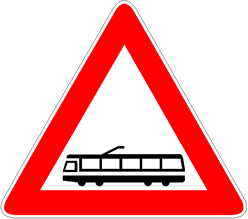
Il segnale raffigurato preannuncia un passaggio a livello ferroviario senza barriere

Study the whole theory course in the Driving Freedom app
Bilingual audio lessons that teach the rules behind the questions, not just the answers.
Driving Freedom gives you 6,700+ Patente B exam practice questions, with explanations in English, Persian and Arabic. Download the app and start today.


Read this in another language:
Danger Signs — Practice Question 272
The sign shown warns of an ungated railway level crossing
علائم خطر — سوال تمرینی شماره 272
غلط: «علائم نشان داده شده یک گذرگاه ریلی بدون حاجز را اعلام میکند.»
إشارات الخطر — سؤال تدريبي رقم 272
تشير اللوحة الموضحة إلى وجود معبر سكة حديد بدون حواجز
Segnali di pericolo — Domanda di pratica 272
Il segnale raffigurato preannuncia un passaggio a livello ferroviario senza barriere
Related questions
FALSO Il segnale raffigurato preannuncia un eventuale transito di filobus FALSO Il segnale raffigurato può essere integrato con un dispositivo a due luci rosse che si accendono alternativamente FALSO Il segnale raffigurato obbliga a dare la precedenza ai filobus FALSO Il segnale raffigurato vieta il sorpasso dei tram FALSO Il segnale raffigurato preannuncia una zona in cui possono circolare solo i veicoli in servizio pubblico VERO In presenza del segnale raffigurato si può sorpassare a destra il tram in marcia se vi è lo spazio necessario VERO In presenza del segnale raffigurato si può circolare sui binari senza intralciare la marcia del tram VERO In presenza del segnale raffigurato si può sorpassare a destra il tram fermo al centro della strada per la salita e discesa dei passeggeri, solo se esiste l'apposito salvagente
See all questions in ATTRAVERSAMENTO TRANVIARIO →